
Field Reflection: A New Narrative of Empowerment

Updated: Mar 3
My recent fieldwork across three states of Eastern India - Jharkhand, West Bengal, and Odisha was more than just an assignment, as a tribal woman. It was an emotional and eye-opening journey that reshaped my understanding of resilience, empowerment, and success. I set out to document best practices in livelihood generation and women’s empowerment in tribal villages. What I found was a remarkable transformation-women rising as entrepreneurs, challenging societal norms, and becoming the primary earners of their families.
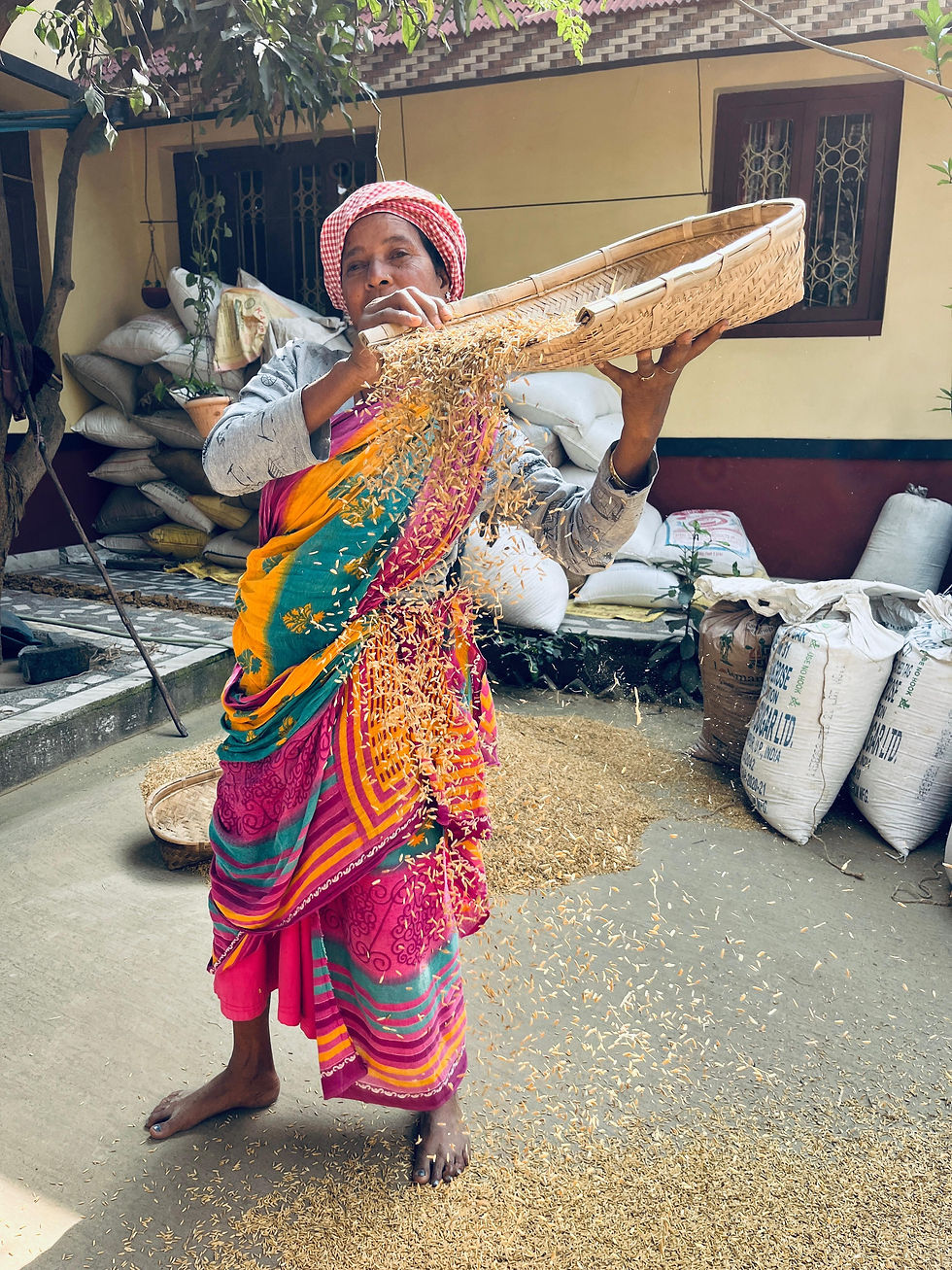
When we think of independent and empowered women, an urban image often comes to mind-a woman in a blazer, moving confidently inside a corporate building, giving presentations to clients. But here, in these villages, I saw true independence taking an entirely different form. Women in cotton sarees, some barefoot, running businesses, leading households, and shaping the future of their families. They are called “Lakhpati Women,” earning in lakhs annually, a term that once seemed far-fetched for rural tribal women but is now a reality. The pride in their eyes, the confidence in their walk, and the self-assurance in their voices shattered every stereotype I had encountered before.
For many of these women, the journey to financial independence was not easy. While Dakshin Kendbana struggled with water, Simni’s struggle was different; Poverty and lack of opportunity.” In Dakshin Kendbana, water scarcity was a harsh reality until 2019. Jaleswari Hansda, a resident, recalled how every day felt like a struggle. The drought-ravaged land could not sustain crops, forcing families into hunger and deprivation. Women carried the burden of fetching water from distant sources, their days spent in exhausting labor. In Simni, women were going to the nearby forest to get firewood so that they could sell it and earn money solely relying on that. Also, women here had long been bound by traditional gender roles, confined to domestic chores. But when PRADAN, a development organization, stepped in, everything changed. One of the women stated: We realized that while the men had traditionally been the ones in charge of land-related matters, it was equally important for women to have this knowledge. If the men were not around, the women should be able to manage. This realization led to a broader understanding of the need for women's empowerment.” The women took charge of their financial future by venturing into pisciculture. Their success was met with ridicule at first. Fish farming was seen as a man’s job. But these women proved otherwise, earning recognition as the “Simni ki Didiyan” and inspiring others to break free from societal constraints.
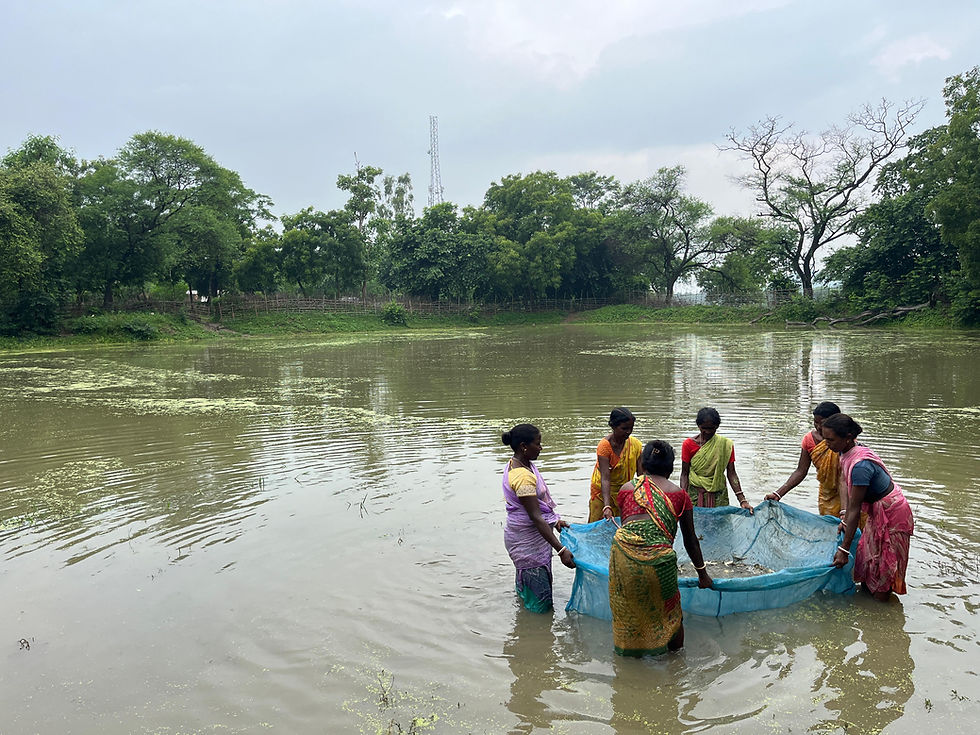
What struck me most was not just the financial transformation but the sheer impact of economic independence. With their earnings, these women are buying vehicles, building pucca houses, and providing quality education for their children. When asked about what they wish to do for themselves they end up telling thousands of wishes for the family and children but few of them also expressed buying jewellery from the earnings. Their success is not just measured in money but in the freedom they now possess, the freedom to make decisions, to dream bigger, and to challenge the status quo.
As I met these incredible women, I couldn’t help but think about my own life. Had my father not left our village to seek a better future, I might have been in their place; married young, confined by traditional expectations. Being a tribal woman often means being shaped by norms that dictate marriage and household responsibilities as life’s ultimate goals. But here, I saw an alternative narrative- one of hope, perseverance, and triumph.
While the heart of this transformation lies in the women’s courage and determination, it would be incomplete to overlook the evolving roles of the men in these communities. I witnessed men who, though initially hesitant or bound by traditional perceptions, began to recognize and respect the changing tides. Their support wasn’t instantaneous; it grew gradually as they saw firsthand the benefits of women’s economic participation not just for the family’s income but for the well-being and status of everyone.

In many households, women had to negotiate space, patiently challenging long-held norms and convincing their husbands and fathers that empowerment wasn’t a threat but a shared strength. Some men became allies, encouraging their wives’ ventures, helping with domestic chores, and even advocating for greater inclusion of women in decision-making. These men are the often-unseen pillars, whose changing attitudes created the support system necessary for women’s success. Their journey alongside women is a reminder that empowerment is not a zero-sum game but a collective evolution. True progress happens when both women and men learn to redefine roles, support each other, and work together to build stronger, more equitable communities.
Hope is the thread that connects us all, and these women have woven it into every aspect of their lives. Watching them build businesses, nurture families, and remake their communities has shown me a new definition of strength not as escaping one’s roots, but standing tall because of them. Their courage reminds me that real empowerment isn’t measured by titles or city lights, but by the power to choose, to dream, and to care for those we love.
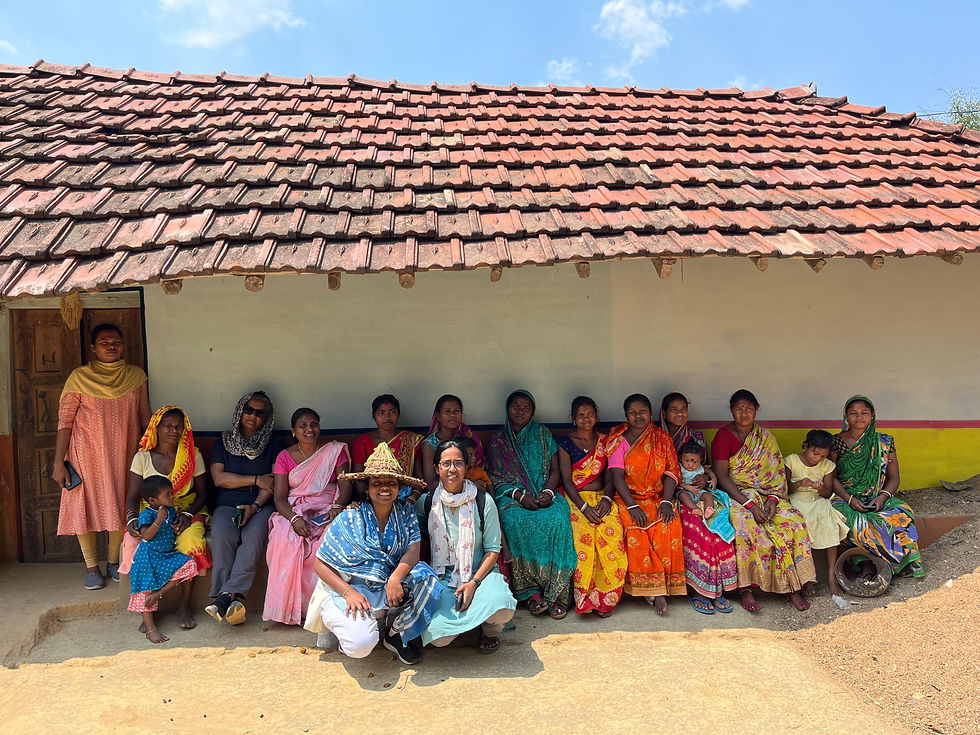
As I return from this journey, I carry their stories with me that is a blend of simplicity, dignity, and endless resilience. I’m proud to be part of their world and to learn from their footsteps. What I saw in these villages wasn’t just transformation; it was the quiet, unstoppable force of women who shape the future, one day at a time.
I know now that empowering others begins with listening, with standing together, and with celebrating every small victory. And as I continue my own path, I will always seek out more such stories of women who refuse to be defined by limits, and who inspire us all to rise.
Note: The field visit was led by Shodhvahini Media Collective.
About the author: Sushila Murmu is a sustainability professional and current MSc student in Environmental Policy and Management at the University of Bristol, United Kingdom. With over five years of experience working across community-driven environmental and rural development projects in India, she has led initiatives empowering communities, supported field research on biodiversity and clean energy, and is passionate about advancing social and ecological equity.


This is such a powerful narrative, challenging the conventional image of empowerment. It's truly inspiring to see how women, like the "Simni ki Didiyan" who overcame ridicule, are redefining success. The idea that empowerment is a collective evolution, where men also adapt and support, is a crucial detail often overlooked. This holistic progress truly redefines what strength looks like, far beyond a simple town of salem. ✨
Interessant onderwerp en goed uitgelegd. De ontwikkeling van digitale diensten verandert de manier waarop gebruikers met online content omgaan. Aanvullende details over dit onderwerp zijn te vinden op de website. Deze inzichten helpen om digitale trends beter te begrijpen.