
O Departing Soul, Your Place is here!

Death, Memory, and Diri Dul Sunum among the Ho Tribe of Jharkhand
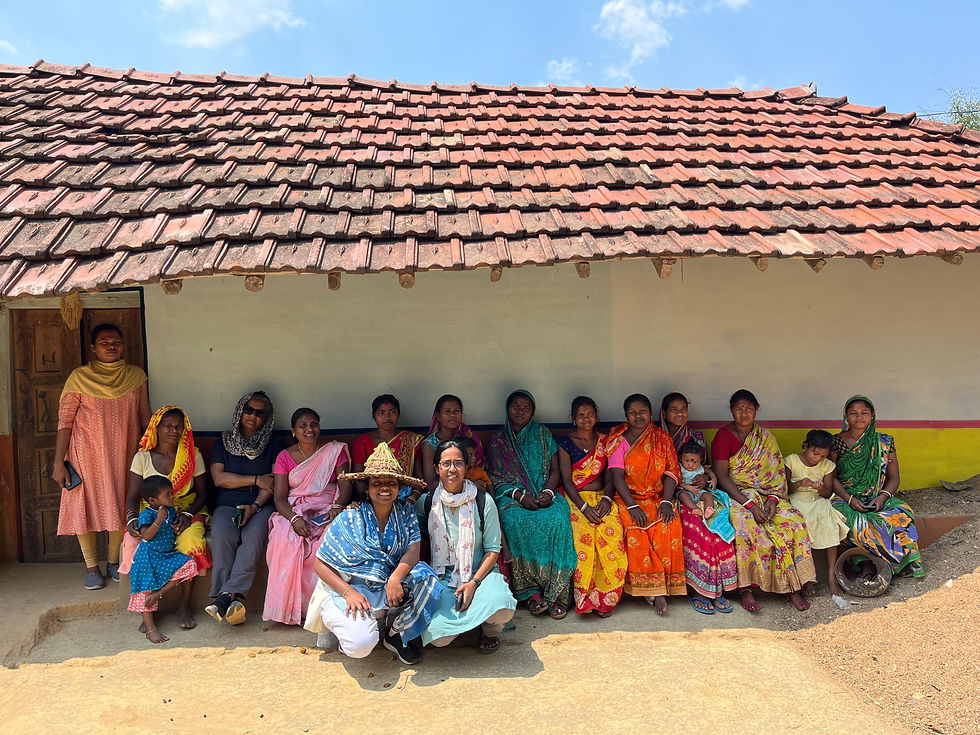
In April 2026, people began gathering outside the house of Saroj Laguri in Masabila village, West Singhbhum. Men, women, elders, and children arrived early in the morning. They had come to prepare for Diri Dul Sunum, an important post-funeral mortuary ceremony among the Ho community.
Before long, people walked together into the community forest. The women collected sal leaves, while the men gathered jamun leaves, bamboo, and firewood. Young boys and girls helped carry materials and arrange food for those working in the forest. Elders supervised the preparations and discussed the sequence of rituals that would take place. Everyone was there to honour the memory of Saroj’s husband, Shatrughan Laguri.

Shatrughan had died in December 2025 after a long struggle with kidney disease. His death left Saroj alone. The couple had no children. Alongside her grief were practical concerns. The paddy in their fields was ready for harvest, and postponing the work would have meant losing an entire season’s crop. Saroj completed the immediate funeral rites, harvested and sold the paddy, and waited until she could afford to organise the larger ceremony.
For Saroj, Diri Dul Sunum was much more than a ritual obligation. It was her final public act of remembrance for her husband. Their marriage had been a love marriage, and she wanted to honour him with dignity. She also hoped that younger people in the village would learn about traditions that are gradually fading from everyday life.
To understand the significance of Diri Dul Sunum, it is necessary to look at how the Ho community understands death.
As narrated by Jamadar Laguri, the Munda (village head) of Lakhipai village, death is not regarded as a complete ending among the Ho. The bond between the living and the dead continues after a person passes away. Funeral rites help guide the deceased from the world of the living to the world of the ancestors. Ancestors remain part of family life and are remembered through rituals performed at the Ading, the sacred ancestral space within the household.
When a person dies a natural death, the body is usually buried in the family burial ground, known as the Sasan, located near the home. Before burial, women of the family wash the body with warm water and apply oil and turmeric. The deceased is dressed and prepared for the final journey. Relatives gather around the body, mourning and recalling the person's life.
A son of the deceased then places a mixture of paddy and diri dal (urad dal) into the right hand of the deceased and takes it back into his own hand. This action is repeated three times.
During this ritual, family members speak directly to the deceased. They ask the departing soul not to take away all the prosperity of the household and to leave blessings behind for those who remain in the human realm. Elders often address the deceased in words similar to:
“You are leaving us now. Do not take away all the wealth, grain, livestock, and fortune of the household. Leave something behind for your children, grandchildren, and relatives. Let the family continue to prosper.”
At the same time, members of the bloodline attempt to snatch the mixture of paddy and diri dal from the hand of the deceased. The grains are later preserved and mixed with the first seeds sown in the fields. Through this practice, people believe that the blessings and fertility associated with the deceased are carried into future harvests. Death is therefore understood as a transformation in the relationship between the living and the dead.
The body is buried along with personal belongings, grains, utensils, and coins. These objects accompany the deceased on the journey to the ancestral realm. Burial marks the beginning of another stage in the person’s existence.
On the third or fifth day after death, Hoyo Racham and Jate Aeda rituals are performed. During Hoyo Racham, male members of the bloodline shave their heads and bathe in a pond or river. This act signifies purification and marks the end of the immediate mourning period. Jate Aeda, a ritual sacrifice, is then carried out by members of another Ho clan. Only after these ceremonies are completed do family members formally re-enter the house and resume their everyday lives.
The most important part of the process takes place later that evening.
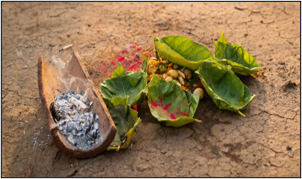
The Ading is cleaned and prepared. Ashes are carefully spread near its entrance. Family members gather together and call out to the spirit of the deceased, inviting it to return home and take its place among the ancestors, known as Oa-Bongas, who are regarded as the guardians of the household.
As these words are spoken, two iron ploughshares are struck together, producing a sharp metallic sound believed to guide and summon the spirit. Water is poured onto the ground. The calling is repeated seven times.
Afterwards, a lamp is lit, and everyone carefully examines the ashes spread near the entrance. A footprint, mark, or disturbance in the ashes is interpreted as evidence that the spirit has returned and accepted the invitation.
Food, meat, and hadiya (traditional rice beer) are then shared among relatives and community members. The period of mourning slowly gives way to remembrance. The deceased is no longer regarded as a wandering spirit but as an ancestor who has found a place within the lineage.
Several months after her husband’s death, Saroj’s Diri Dul Sunum continued this journey of remembrance.
She chose Manish Laguri, the son of her husband’s brother, to lead the ceremony. Since she had no children of her own, she wanted him to learn the rituals and carry them forward in the future. In the days before the ceremony, Manish coordinated preparations, informed villagers, and organised the collection of materials from the forest.

The involvement of the village was remarkable. People contributed their labour, time, food, and knowledge. Elders explained the meaning of ritual objects to younger participants. Much of the learning happened through observation, participation, and conversation.
At the centre of Diri Dul Sunum is the installation of the Aasan-diri, a memorial stone placed in honour of the deceased. The stone is carefully selected, transported, and installed through collective effort. Its placement is accompanied by ritual offerings and prayers. The stone serves as a permanent reminder of the deceased’s presence within the social and physical landscape of the community.

For the Ho, stones are repositories of memory. They connect descendants to those who came before them and ensure that the names of the dead remain part of community history. In some cases, especially for respected individuals, standing memorial stones are erected near roads, pathways, fields, or water bodies.
The ceremony also involves communal feasting. Relatives, neighbours, and guests share rice, meat, and hadiya. Through eating together, the community acknowledges both the loss of the deceased and the continuity of collective life.
For Saroj, the ceremony brought together grief, memory, and responsibility. She honoured the man she had loved while ensuring that younger generations could witness and take part in the rituals. What began as a deeply personal loss became a shared act of remembrance.
Diri Dul Sunum offers a glimpse into a Ho understanding of death in which the dead remain connected to the living. Through ritual, memory, land, ancestry, and community participation, these relationships continue across generations. The ceremony helps the deceased complete the journey from the world of the living to the world of the ancestors and ensures that their memory remains part of community life.
Note: I acknowledge that Munda Jamadar Laguri, Mukhiya Anita Laguri, and all participating community members gave their informed consent for the publication of this work and the use of the information they shared for academic purposes.
I sincerely thank Lakhipai Village Munda Jamadar Laguri, Gumuria Panchayat Mukhiya Anita Laguri, and the people of Masabila Village (Ho community) for their support, local knowledge, and valuable contributions during the fieldwork. I am especially grateful to Manish Laguri, Subash Laguri, Belshyam Laguri, and all community members who shared their experiences and insights. I also thank my friend Rajendra Hessa for inspiring and encouraging me throughout this work.
About the Author: Abhishek Gupta, a former Gandhi Fellow, batch 17, is a community researcher and development practitioner based in Varanasi, Uttar Pradesh. His work focuses on people, grassroots governance, and socio-economic studies, with a strong emphasis on amplifying community voices and lived experiences. He holds a Master’s degree in Linguistics and a Bachelor’s degree in English Literature from Banaras Hindu University.

What a profoundly moving account of the Ho community's understanding of death as a transformation, not an ending. The detailed description of rituals like the Diri Dul Sunum, where community effort ensures memory lives on through memorial stones and shared feasts, truly highlights the continuity of life across generations. It makes one reflect on how different cultures approach these transitions, offering perspectives far removed from the simple escapism found in, for example, unblocked games 66.